
Understanding Holistic Addiction Treatment: A Path to Whole-Person Healing
What is holistic addiction treatment? It’s an approach that treats the whole person—mind, body, and spirit—rather than just the symptoms of addiction. This method addresses the physical, emotional, social, spiritual, and intellectual aspects of recovery, working alongside traditional therapies to help individuals heal from the root causes of substance use.
Key aspects of holistic addiction treatment include:
- Whole-Person Focus: Treats mental, physical, emotional, and spiritual health together
- Addresses Root Causes: Targets underlying issues like trauma, stress, and emotional imbalances
- Complementary Approach: Works alongside evidence-based treatments like medical detox and therapy
- Diverse Therapies: Includes yoga, meditation, nutrition, art therapy, acupuncture, and exercise
- Personalized Care: Treatment plans custom to individual needs and recovery goals
Addiction affects more than just your physical body. This disease has mental, emotional, social, and spiritual ramifications as well. When you’re struggling with substance use, it can feel like every part of your life is broken. Traditional treatment often focuses on stopping drug use and managing withdrawal symptoms. But what happens to the anxiety that drove you to use in the first place? What about the trauma you’ve been trying to numb? Or the disconnection from yourself and others that made substances feel like the only answer?
This is where holistic addiction treatment comes in. It recognizes that you’re not just an addiction—you’re a complete person who deserves comprehensive healing. Instead of treating symptoms in isolation, holistic care looks at how your physical health, emotional state, relationships, sense of purpose, and mental well-being all connect and influence your recovery.
The philosophy is simple but powerful: when you heal all parts of yourself, you build a stronger foundation for lasting sobriety. Research shows that addressing these multiple dimensions of health can improve treatment satisfaction and success rates. Whether it’s learning to manage stress through meditation, rebuilding your body’s health with proper nutrition, processing trauma through art therapy, or finding meaning through spiritual practices, holistic treatment gives you tools that extend far beyond just saying no to substances.
At Drug Rehab Headquarters, we’ve helped thousands of individuals and families understand what is holistic addiction treatment and find personalized programs that address their unique needs. Our certified counselors with lived experience provide 24/7 support to guide you toward comprehensive recovery options.
So, What is Holistic Addiction Treatment Exactly?
At its heart, holistic addiction treatment is about restoring balance by viewing you as a whole person—mind, body, and spirit. While addiction is a recognized brain disorder, holistic treatment sees it as a complex issue with roots in your physical, mental, emotional, social, and spiritual well-being. The goal is to treat you, not just the substance use disorder.
This means uncovering underlying causes like chronic stress, trauma, or emotional imbalances. Holistic therapy aims to heal these wounds through personalized, non-medical methods that are flexible and gentle, helping you reconnect with yourself and build a resilient foundation for sobriety. Explore programs that integrate these principles on our Treatment Programs page.
Core Principles of What is Holistic Addiction Treatment
The philosophy behind what is holistic addiction treatment is built on several key principles:
- Whole-Person Healing: The cornerstone of holistic care, this addresses every aspect of your being—physical, emotional, social, spiritual, and intellectual—treating you as a complete individual, not just a set of symptoms.
- Individualized Care: Recognizing that each person’s journey is unique, treatment plans are highly personalized to your specific history, challenges, and goals.
- Integration of Mind, Body, and Spirit: This principle emphasizes the powerful connection between these elements. Healing in one area supports the others, creating a synergy for recovery (e.g., exercise improves mood, meditation reduces tension).
- Empowerment and Self-Awareness: Holistic methods empower you by fostering self-awareness. Understanding your triggers, emotions, and strengths gives you the tools to manage cravings and make healthy choices.
- Identifying Root Causes: Rather than just stopping substance use, this approach identifies and resolves underlying issues like trauma or mental health challenges for a more sustainable path to sobriety.
- Fostering Overall Well-being: The goal is not just abstinence but a life filled with purpose, joy, and healthy relationships. This involves teaching coping skills, improving physical health, and nurturing a sense of meaning.
Key Components: What is Holistic Addiction Treatment Made Of?
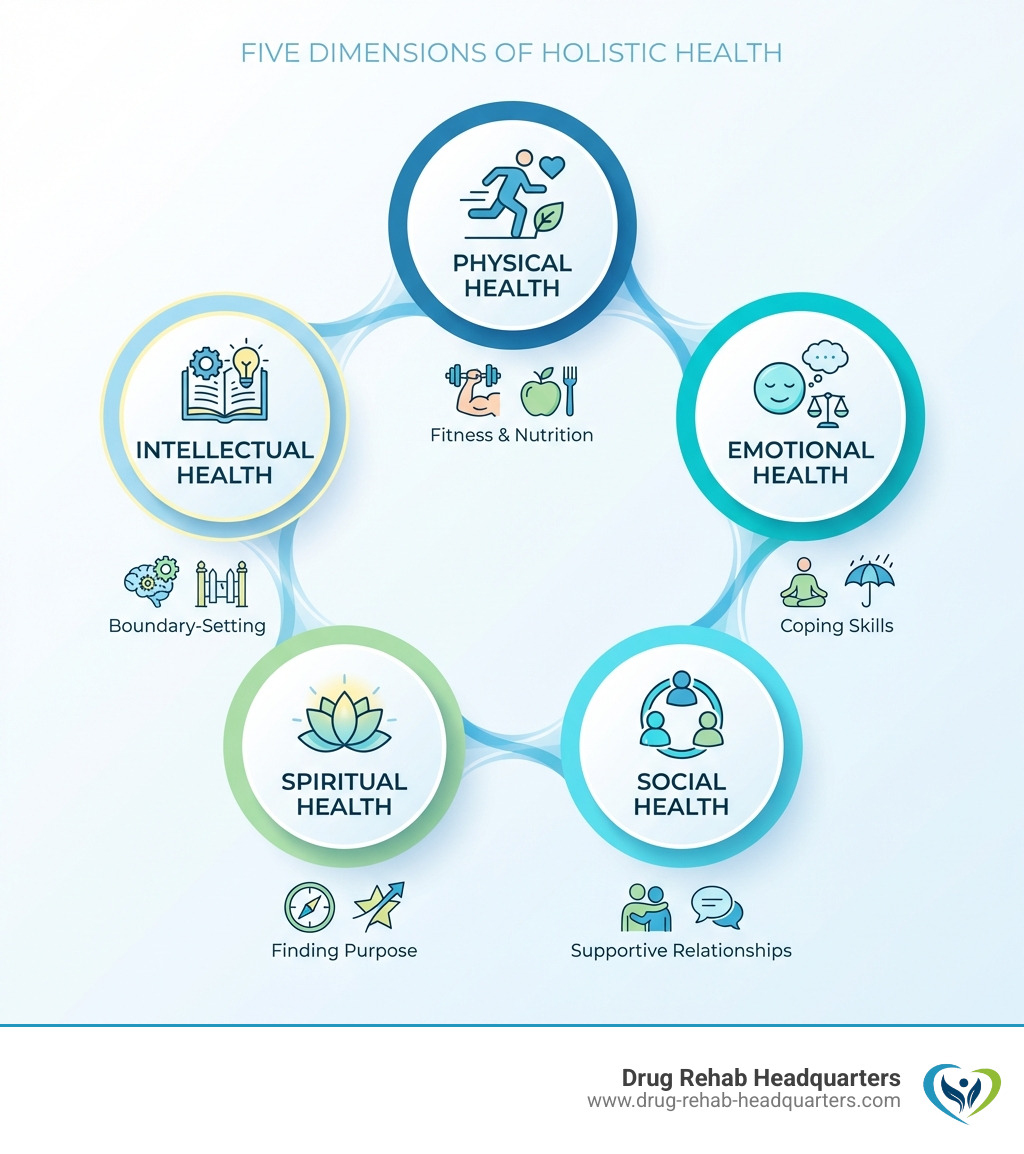
When we talk about the “whole person,” we’re referring to five interconnected dimensions of health that holistic addiction treatment typically addresses to build a strong foundation for recovery:
-
Physical Health: Addiction takes a heavy toll on the body. Holistic programs restore physical vitality through:
- Nutritional Therapy: Repairs damage, boosts energy, and stabilizes mood through healthy diet education.
- Exercise: Rebuilds strength and acts as a natural stress reliever and mood booster.
- Rest and Sleep: Adequate, restorative sleep is vital for physical and mental healing.
-
Emotional Health: Holistic treatment helps you develop healthier ways to process feelings, as addiction is often used to cope with difficult emotions:
- Coping Mechanisms: Learn to identify and manage emotions without substances through therapies like mindfulness and art therapy.
- Emotional Balance: Fosters resilience and inner peace by helping you experience emotions without being overwhelmed.
-
Spiritual Health: This focuses on finding meaning, purpose, and connection, which is not necessarily religious:
- Purpose and Meaning: Meditation, visualization, and nature immersion help you explore values and find direction.
- Inner Connection: Practices encourage connecting with your inner self, fostering self-compassion.
-
Social Health: Rebuilding healthy connections is vital to combat the isolation caused by addiction:
- Healthy Relationships: Develop communication skills and build a supportive network through therapy and group activities.
- Reducing Isolation: Engaging with peers combats loneliness and provides encouragement.
-
Intellectual Health: This involves engaging your mind and developing life skills for sobriety:
- New Skills: Life skills development (e.g., financial management) builds confidence.
- Healthy Boundaries: Setting and maintaining boundaries is crucial for protecting your recovery.
By addressing these five interconnected areas, holistic addiction treatment aims to heal, empower, and equip you for a thriving, sober life.
Holistic vs. Traditional Addiction Treatment: Understanding the Difference
When considering addiction recovery, you might encounter both “traditional” and “holistic” approaches. While they share the common goal of helping you achieve sobriety, their methodologies and philosophical underpinnings differ significantly. However, it’s crucial to understand that in modern, effective treatment, these two approaches are often integrated, working hand-in-hand.
Here’s a breakdown of how they compare:
| Feature | Traditional Addiction Treatment | Holistic Addiction Treatment |
|---|---|---|
| Focus | Primarily on stopping substance use and managing symptoms | On the whole person: mind, body, and spirit |
| Approach | Evidence-based, structured, often symptom-specific | Integrative, experiential, person-centered, addresses root causes |
| Goal | Abstinence, relapse prevention, behavioral modification | Overall well-being, self-awareness, purpose, lasting lifestyle change |
| Therapies | Medical detox, individual/group talk therapy (CBT, DBT), medication-assisted treatment (MAT), 12-step programs | Yoga, meditation, art therapy, nutrition, acupuncture, massage, nature therapy, spiritual counseling, mindfulness |
Traditional addiction treatment often begins with medically supervised detox to safely manage withdrawal symptoms. This is a critical first step, as certain withdrawals can be dangerous. Following detox, traditional programs typically employ behavioral therapies like Cognitive Behavioral Therapy (CBT) and Dialectical Behavioral Therapy (DBT), individual counseling, group therapy, and sometimes medication to address cravings and co-occurring mental health issues. These methods are rigorously researched and proven effective. For those needing intensive medical oversight, our Medical Detox Programs provide a safe start to recovery.
Holistic addiction treatment, on the other hand, expands the scope. It recognizes that addiction is not just a physical or psychological problem, but one that impacts your entire being. Instead of replacing traditional, evidence-based treatments, holistic methods complement them. As research highlights, rehabilitation centers often use holistic therapies alongside evidence-based treatments, such as medically-assisted detox, individual therapy, group therapy, and other medical interventions to create a well-rounded addiction treatment program. This integrated approach is especially beneficial for individuals with co-occurring mental health disorders, often referred to as a Dual Diagnosis Treatment Facility. By addressing both addiction and underlying mental health issues simultaneously, we can foster more complete and sustainable healing.
Essentially, traditional treatment provides the necessary clinical framework and tools to stop using substances, while holistic treatment provides the deeper healing, self-findy, and life skills needed to build a fulfilling, sober life. Together, they offer a powerful, comprehensive path to recovery.
Types of Therapies in a Holistic Recovery Program
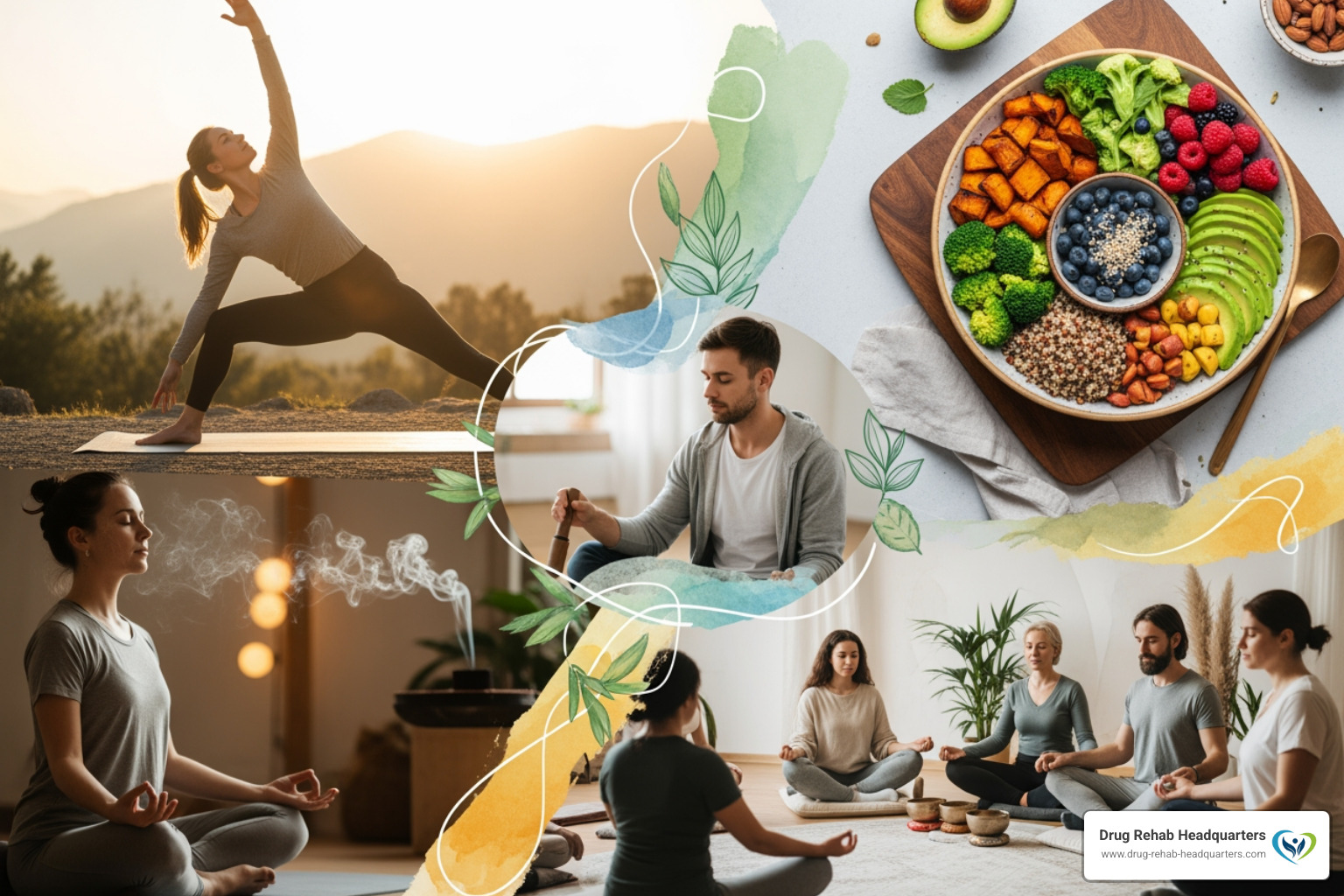
A key aspect of what is holistic addiction treatment is its wide array of therapies. These are carefully chosen modalities designed to engage your mind, body, and spirit. Many are experiential (doing rather than talking), which is powerful for self-expression, stress reduction, and building coping skills. See how these fit into a broader plan in our Addiction Treatment options.

Mind-Body Practices
These therapies focus on the connection between your mental and physical states, helping regulate emotions and reduce stress.
- Yoga: Combines postures, breathing, and meditation to reduce stress. Studies show yogic practices promote recovery from addiction, helping individuals feel more at ease.
- Meditation: Trains attention and awareness for greater emotional regulation and mental clarity, reducing reactivity to cravings.
- Mindfulness: Focuses on the present moment to develop self-awareness, recognize triggers, and respond to challenges with calm intention.
- Tai Chi: A gentle exercise of slow, flowing movements that improves balance and mental focus, promoting inner peace.
- Breathwork: Simple breathing exercises that calm the nervous system, reduce anxiety, and help manage cravings.
Experiential and Creative Therapies
These approaches use creative expression and engaging activities to process emotions and develop new skills.
- Art Therapy: Uses visual art to explore emotions and resolve conflicts. Research indicates art therapy helps individuals find meaning, work through trauma, and improve well-being.
- Music Therapy: Using music (listening, playing, composing) for emotional expression, stress relief, and connection.
- Equine Therapy: Working with horses teaches trust, communication, and self-awareness in a non-judgmental setting.
- Adventure Therapy: Activities like hiking or rock climbing build self-confidence and problem-solving skills.
- Dance/Movement Therapy: Uses movement to express emotions, process trauma, and improve body awareness.
Physical and Nutritional Wellness
Addressing physical health is fundamental, as it directly impacts mood, energy, and cognitive function.
- Nutritional Counseling: Teaches how balanced eating impacts mood and energy, correcting deficiencies and stabilizing brain chemistry.
- Fitness Programs: Custom exercise rebuilds strength, releases mood-boosting endorphins, and provides a healthy outlet for stress.
- Massage Therapy: Reduces stress and can be very helpful during early recovery. Studies show massage therapy decreases cortisol while increasing serotonin and dopamine.
- Acupuncture: A traditional Chinese medicine practice using fine needles to stimulate the nervous system, reduce cravings, and restore balance.
- Chiropractic Care: Focuses on spinal adjustments to improve nervous system function, which can help patients resist cravings and improve recovery chances.
These diverse therapies offer a rich mix of healing opportunities, allowing us to create a truly personalized recovery plan that resonates with your individual needs and preferences across our network of centers in states like California, Florida, Texas, New York, and many more.
The Benefits of a Holistic Approach for Lasting Sobriety
Choosing a holistic addiction treatment program offers benefits that extend far beyond stopping substance use. By addressing the whole person, these programs lay a robust foundation for long-term recovery.
Here’s how a holistic approach supports lasting sobriety:
- Improved Self-Awareness: Therapies like mindfulness help you become more attuned to your thoughts and feelings. This awareness allows you to identify triggers and respond to challenges consciously.
- Reduced Stress and Anxiety: Practices like yoga, meditation, and breathwork calm the nervous system, lowering the stress and anxiety that often fuel substance use.
- Better Physical Health: Holistic programs prioritize nutrition, exercise, and sleep to repair physical damage, boost energy, and restore vitality, making you feel stronger.
- Improved Emotional Regulation: Experiential therapies and counseling equip you with tools to manage difficult feelings without turning to substances.
- Development of Healthy Coping Mechanisms: Holistic treatment provides a toolkit of healthy coping strategies, such as exercise, creative expression, and spiritual practices.
- Increased Treatment Satisfaction: By addressing your needs comprehensively, you’re more likely to engage fully. A study found a correlation between treatment satisfaction and success, and holistic care often increases this satisfaction.
- Support for Long-Term Recovery and Relapse Prevention: By healing underlying issues and building practical skills, holistic treatment strengthens your resilience against relapse. This comprehensive foundation is key to sustaining sobriety and forms the basis of a robust aftercare plan. Learn more on our Post Rehab Drug Rehab Aftercare page.
- Fostering Spirituality and Purpose: Holistic treatment helps fill the spiritual void addiction can create by helping you find meaning and purpose (not necessarily religious). Studies suggest strong spiritual beliefs are linked to better health outcomes, which is a powerful motivator for sobriety.
What is holistic addiction treatment helps you not just stop using, but start living a vibrant, healthy, and meaningful life.
Choosing the Right Holistic Treatment Center
Finding the right holistic addiction treatment center is paramount to your success. With many options available across North America, it’s important to know what to look for. Our certified counselors at Drug Rehab Headquarters are here 24/7 to offer personalized guidance.
Here’s what we recommend considering when choosing a holistic addiction treatment center:
- Accreditation: Seek centers accredited by CARF or The Joint Commission. Accreditation signifies a commitment to quality, safety, and high standards of care.
- Licensed and Experienced Staff: Ensure the staff includes licensed medical professionals, therapists, and certified counselors. Holistic practitioners should have specific certifications (e.g., in yoga or acupuncture). Our counselors with lived experience offer unique empathy.
- Integration with Evidence-Based Care: The most effective programs integrate holistic therapies with evidence-based treatments like therapy, medical detox, and MAT (if needed).
- Range of Therapies Offered: A good center offers a diverse range of therapies. Review their offerings (e.g., art therapy, yoga, nutritional counseling) to see if they align with your needs.
- Personalized Treatment Plans: The best centers avoid a one-size-fits-all approach. They conduct a thorough assessment to create a personalized plan for your unique needs.
- Focus on Underlying Causes: A strong program helps you address the root causes of addiction, like trauma or stress, not just the symptom of substance use.
- Aftercare Planning: Inquire about their aftercare planning, such as alumni programs and sober living options, for ongoing support.
- Transparency and Philosophy: A reputable center is transparent about its philosophy, success rates, and daily schedule. Ensure their approach resonates with you.
Potential Drawbacks to Consider: Be aware of potential drawbacks. Some centers may be less regulated, evidence for some modalities may be emerging, and costs can be higher with varied insurance coverage. Thorough research is critical.
Our team at Drug Rehab Headquarters can help you steer these factors and connect you with accredited, reputable centers that fit your goals. To start your search, visit our Find an Addiction Treatment Center page.
Frequently Asked Questions about Holistic Recovery
We understand you might have more questions about what is holistic addiction treatment and how it fits into your recovery journey. Here are answers to some common inquiries:
Is holistic treatment enough on its own?
Holistic therapies are powerful but are most effective when they complement, not replace, evidence-based treatments. As SAMHSA notes, alternative approaches are helpful when paired with evidence-based practices. An effective plan often combines medical detox, behavioral therapies (CBT, DBT), and MAT with holistic modalities. This integrated approach addresses physical dependence alongside the underlying psychological, emotional, and spiritual aspects of addiction, making the foundation for recovery stronger.
What is the role of spirituality in holistic treatment?
Spirituality in holistic addiction treatment is broad, inclusive, and not necessarily religious. It focuses on connecting with oneself, nature, or a higher power to find meaning, purpose, and belonging, which can counteract the isolation of addiction. Spiritual practices aim to foster connection, cultivate purpose, and build resilience. Research shows that people with strong spiritual beliefs tend to be healthier, and this dimension can be a powerful antidote to the emptiness left by addiction.
How does holistic therapy address underlying causes of addiction?
Holistic therapy addresses the root causes of addiction—like unresolved trauma, stress, or mental health challenges—rather than just the symptom of substance use. It works by:
- Cultivating Self-Awareness: Practices like mindfulness and meditation help you identify emotional triggers that lead to cravings.
- Processing Trauma: Trauma-informed yoga and art therapy provide safe, non-verbal outlets to process past traumas.
- Managing Emotions: Creative therapies like music or dance help you understand and express complex emotions driving addiction.
- Reducing Stress: Techniques like breathwork and massage offer healthy ways to manage stress, reducing the need to self-medicate.
By providing these tools, holistic therapy empowers you to uncover and heal the root issues, breaking the cycle of addiction for lasting recovery.
Begin Your Journey to Wholeness
Understanding what is holistic addiction treatment reveals a path to recovery that is profound and transformative. It’s a journey that moves beyond simply stopping substance use to accept comprehensive healing of your mind, body, and spirit. By addressing the physical, emotional, social, spiritual, and intellectual aspects of your life, holistic care equips you with a robust toolkit for navigating challenges, finding purpose, and building a truly fulfilling, sober life.
We believe that every individual deserves a personalized path to recovery. If you’re ready to explore how a holistic approach can benefit you or a loved one, we’re here to help. Drug Rehab Headquarters offers 24/7 free support from certified counselors, many of whom have lived experience, providing personalized guidance to help you find a suitable, evidence-based, and holistic treatment program across North America, including all the states we serve.
Your journey to wholeness starts with a single step. Let us help you find the right Holistic Drug Addiction Treatment program that fits your unique needs and aspirations.