
Why Nutrition Matters in Your Recovery Journey
Nutrition addiction recovery means understanding how food directly impacts your ability to heal from substance use disorder and maintain sobriety. Here’s what you need to know:
Key Components of Nutrition Addiction Recovery:
- Repairing Physical Damage: Substance abuse depletes essential vitamins and minerals, and proper nutrition helps restore your body’s balance
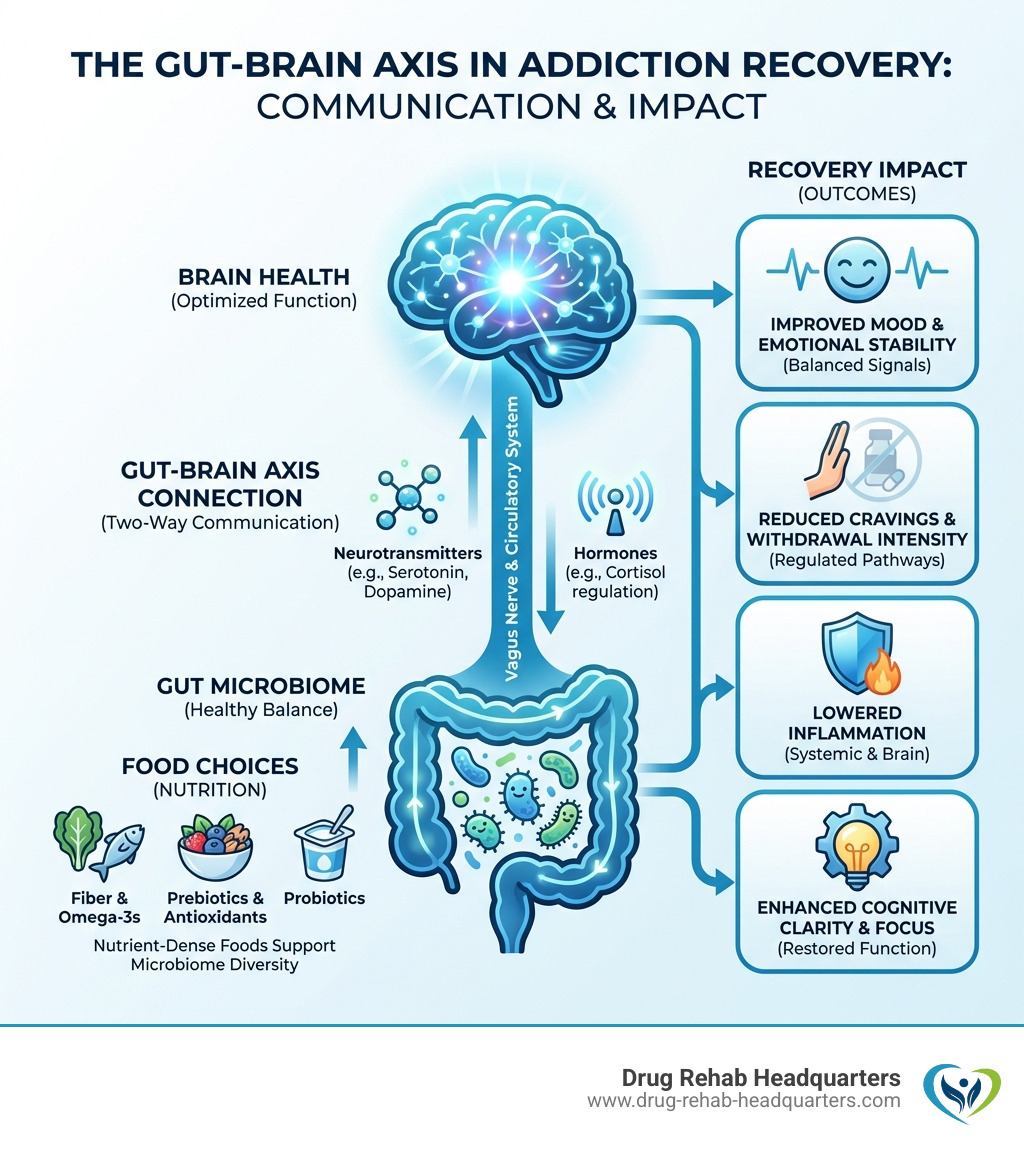
- Stabilizing Brain Chemistry: Nutrients support neurotransmitter production (like dopamine and serotonin), which improves mood and reduces cravings
- Managing Withdrawal: Balanced meals help regulate blood sugar, easing withdrawal symptoms and preventing mood swings
- Supporting Long-Term Sobriety: A nutrient-dense diet strengthens your immune system, improves mental clarity, and reduces relapse risk
A healthy diet is crucial in addiction treatment, yet research shows a troubling gap: less than 7% of treatment centers use a nutritionist, and only half offer nutrition education. This is critical because most people in treatment show signs of nutritional deficiency, which can increase drug-seeking behavior and hinder recovery.
The science is clear: malnutrition harms more than just the body. It impairs the brain’s ability to produce chemicals that regulate mood and reduce cravings. Lacking key nutrients like B vitamins, magnesium, or amino acids can intensify withdrawal symptoms and strengthen the pull toward substances.
Recovery from substance use affects metabolism, organ function, and mental well-being. Drugs and alcohol disrupt nutrient absorption, damage organs like the liver and stomach, and can lead to severe malnourishment. For instance, chronic alcohol use is a leading cause of B vitamin deficiency, while opioid use often causes constipation and poor food intake.
At Drug Rehab Headquarters, we’ve helped thousands find the path to recovery by emphasizing the vital role of nutrition. We know rebuilding your health through proper nutrition is a cornerstone of lasting sobriety, and we’re here to guide you.
The Vicious Cycle: How Substance Abuse Depletes the Body
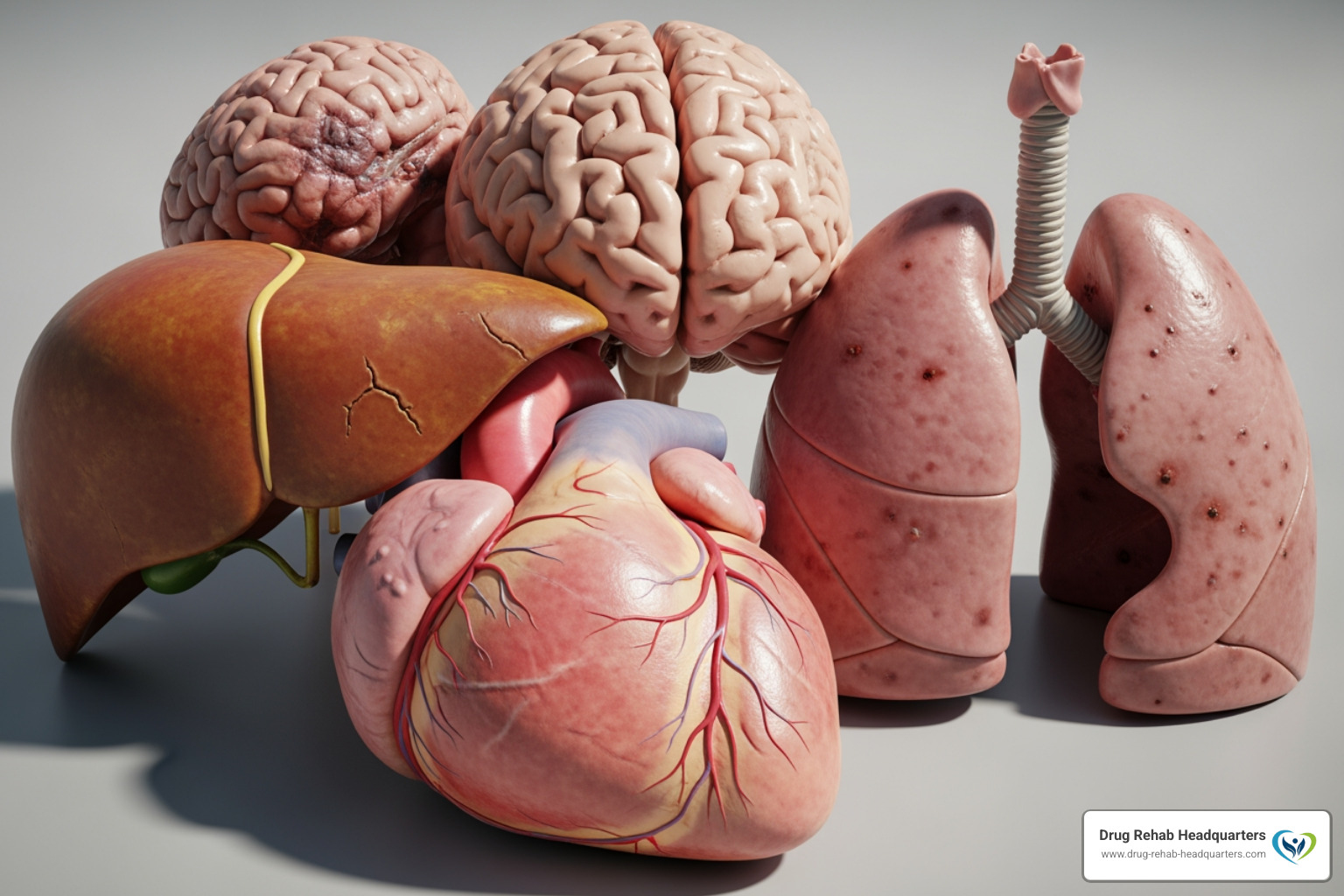
Substance use disorder (SUD) profoundly impacts both mental and physical health. A major consequence is severe malnutrition, where the body is starved of essential nutrients, leading to health problems that hinder recovery.
Research shows malnutrition is prevalent among individuals with SUD. Both alcohol and drug use lead to nutrient deficiencies that impact physical and psychological health. For example, chronic alcohol use damages the stomach lining and impairs digestion, while opioids and stimulants suppress appetite, leading to weight loss, dehydration, and poor food intake.
These substances disrupt metabolism and nutrient absorption, creating a vicious cycle where poor nutrition can promote drug-seeking behavior. When the body struggles, the mind also suffers, making it harder to engage in treatment and resist relapse.
The harm extends to vital organs. Heavy alcohol use can damage the liver and pancreas, leading to complications like diabetes, high blood pressure, and cirrhosis. For detailed insights, you can explore relevant research on SUD and nutritional status. You can also learn more about the broader health risks associated with substance abuse.
How Malnutrition Hinders Recovery
Malnutrition creates significant barriers during recovery. When the body and brain are deprived of nutrients, the path to sobriety is much steeper. It contributes to:
- Mood Swings: Poor nutrition causes imbalances in blood sugar and neurotransmitters, leading to irritability, anxiety, and mood swings that make emotional regulation difficult.
- Increased Cravings: The brain’s reward pathways for food and substances can overlap, leading to an “addiction transfer” to sugary foods. A nutritionally depleted body seeks quick energy, mimicking drug reward pathways and intensifying cravings.
- Cognitive Impairment: Deficiencies in nutrients like B vitamins impact brain function, causing memory problems, poor concentration, and impaired decision-making. This hinders engagement in therapy and learning coping skills.
- Depression and Anxiety: Malnutrition is linked to mental health issues, as nutrient deficiencies reduce the production of mood-regulating neurotransmitters. This can worsen depression and anxiety, a significant challenge for those with co-occurring conditions. You can find more information on co-occurring depression and its treatment.
- Relapse Risk: Together, mood instability, cravings, cognitive issues, and poor mental health increase relapse risk. A body and mind in distress are more likely to revert to destructive patterns. Nutrition addiction recovery helps break this cycle.
Common Nutritional Deficiencies in SUD
While general malnutrition is common, specific deficiencies often depend on the substance used. Addressing these is a crucial step in Nutrition addiction recovery.
- B Vitamins (Thiamine, B12, Folate): Especially depleted by alcohol use. Deficiencies can lead to severe neurological disorders like Wernicke-Korsakoff syndrome, anemia, and nervous system problems.
- Vitamin C: Depleted by poor diet and the body’s stress response during substance abuse.
- Vitamin D: Low levels are common in SUD, impacting bone health, immunity, and mood.
- Minerals (Magnesium, Zinc, Calcium): Magnesium deficiency contributes to anxiety and poor sleep. Zinc is vital for immunity and brain health. Calcium is crucial, as alcohol use increases osteoporosis risk.
- Amino Acids: Chronic drug use depletes precursors for vital neurotransmitters like dopamine and serotonin, impacting mood and cravings.
- Omega-3 Fatty Acids: Often lacking in SUD diets, these are critical for brain health, reduced inflammation, and mood stability.
Addressing these deficiencies is a cornerstone of effective Nutrition addiction recovery. For a more comprehensive guide, you can refer to our detailed resources on diet and SUD.
Rebuilding from Within: Key Nutrients for Brain and Body Repair
The good news is that targeted nutrition can rebuild what substance abuse depletes. In Nutrition addiction recovery, a balanced diet repairs damage, stabilizes brain chemistry, and provides energy for healing. It stabilizes blood sugar to mitigate withdrawal and cravings, and supports neurotransmitter production to improve mood and reduce relapse risk.
Nutrients help the brain heal damaged connections. They support the production of chemicals that reduce cravings, stabilize mood, improve sleep, and reduce inflammation. This improves brain function and strengthens the ability to learn new coping skills.
A holistic approach that includes nutritional support makes a profound difference. Focusing on nutrient-dense foods fuels the body and mind for recovery. You can find out more about our holistic treatment options that integrate these components.
The Role of Amino Acids in Cravings and Mood
Amino acids are building blocks for proteins and crucial neurotransmitters that regulate mood, cravings, and sleep. In Nutrition addiction recovery, adequate amino acid intake directly impacts how we feel and cope.
- Tyrosine: A precursor to dopamine, which is vital for motivation, focus, and pleasure. Substance abuse depletes dopamine, leading to cravings. Replenishing tyrosine can help restore these pathways and improve mood.
- Foods rich in Tyrosine: Dairy, meats, fish, soy, legumes, seeds, and nuts.
- L-Glutamine: This amino acid can help alleviate depressive symptoms, improve cognitive function, and reduce sugar cravings, which is helpful for preventing “addiction transfer” to sugar.
- Foods rich in L-Glutamine: Meats, fish, cabbage, spinach, beans, nuts, and grains.
- Tryptophan: The precursor to serotonin, essential for regulating mood, sleep, and impulse control. Increasing tryptophan can help with the depression, anxiety, and sleep issues common in recovery.
- Foods rich in Tryptophan: Poultry, eggs, cheese, nuts, seeds, and oats.
- GABA (Gamma-Aminobutyric Acid): A neurotransmitter that promotes relaxation, reduces anxiety, and improves sleep by calming nerve signals. Supporting GABA can help manage anxiety and restlessness in early recovery.
- Foods that boost GABA: Fermented foods (kimchi, kefir), soy, lentils, spinach, broccoli, and nuts.
By consciously incorporating these amino acid-rich foods, individuals can actively work to rebalance their brain chemistry and support a smoother, more stable recovery.
Essential Vitamins and Minerals for a Healthy Mind
Beyond amino acids, various vitamins and minerals are essential for repairing the body and brain, regulating mood, and supporting health in Nutrition addiction recovery.
- B-Complex Vitamins: Critical for energy and nerve function, especially for those recovering from alcohol use. They support neurotransmitter synthesis and help alleviate fatigue.
- Antioxidants (Vitamins C & E): Substance abuse creates oxidative stress that damages cells. Antioxidants neutralize this damage, protect brain tissue, and can help reduce symptoms of depression and anxiety.
- Antioxidant-rich foods: Berries, pomegranates, cherries, tomatoes, broccoli, nuts, and seeds.
- Vitamin D: Crucial for mood, bone health, and immune function. Deficiencies are common and can worsen depression and fatigue, so adequate intake is vital for mental well-being.
- Magnesium: A natural relaxant that reduces anxiety, improves sleep, and calms the nervous system. Replenishing magnesium can ease the tension of recovery.
- Zinc: Important for immunity, wound healing, and brain health. Deficiency can impair cognitive function.
- Calcium: Essential for bone health, particularly for those recovering from alcohol use, which can cause bone density loss.
Prioritizing a diet rich in these nutrients lays a strong foundation for physical and mental resilience in your Nutrition addiction recovery journey.
Your Practical Guide to Nutrition for Addiction Recovery
Nutrition addiction recovery requires a practical diet focused on repairing damage, stabilizing mood, and reducing cravings. The goal is to nourish the body back to health, making every meal a step toward lasting sobriety.
Meal planning is a cornerstone for stabilizing blood sugar and preventing cravings. Hydration is also critical. Mindful eating helps re-establish a healthy relationship with food, replacing disordered patterns from addiction.
Understanding nutrition’s role within comprehensive addiction treatment programs is key. Programs in states like California, Florida, and Texas often emphasize holistic approaches that include dietary support.
| Nutrient-Dense Whole Foods | Processed & Sugary Foods (Limit or Avoid) |
|---|---|
| Whole Grains (oats, brown rice, quinoa) | White Bread, Pasta, Refined Cereals |
| Lean Proteins (chicken, fish, beans, lentils, tofu, eggs) | Processed Meats (salami, hot dogs), Fried Foods |
| Fresh Fruits (berries, apples, bananas, oranges) | Candies, Pastries, Sugary Desserts |
| Vegetables (broccoli, spinach, carrots, sweet potatoes) | Chips, Fast Food, Instant Noodles |
| Healthy Fats (avocado, nuts, seeds, olive oil) | Trans Fats, Hydrogenated Oils, Excessive Butter |
| Water, Herbal Teas, Unsweetened Beverages | Sodas, Sugary Juices, Energy Drinks |
Best Food Choices and Dietary Patterns
Informed food choices are paramount in Nutrition addiction recovery. Whole, unprocessed foods provide the sustained energy and nutrients needed for healing.
- Complex Carbohydrates: Found in whole grains, legumes, and vegetables, these provide sustained energy to stabilize mood and prevent cravings. Choose oats, quinoa, brown rice, and beans.
- Lean Proteins: Essential for tissue repair and neurotransmitter production. Include chicken, fish, tofu, eggs, and beans.
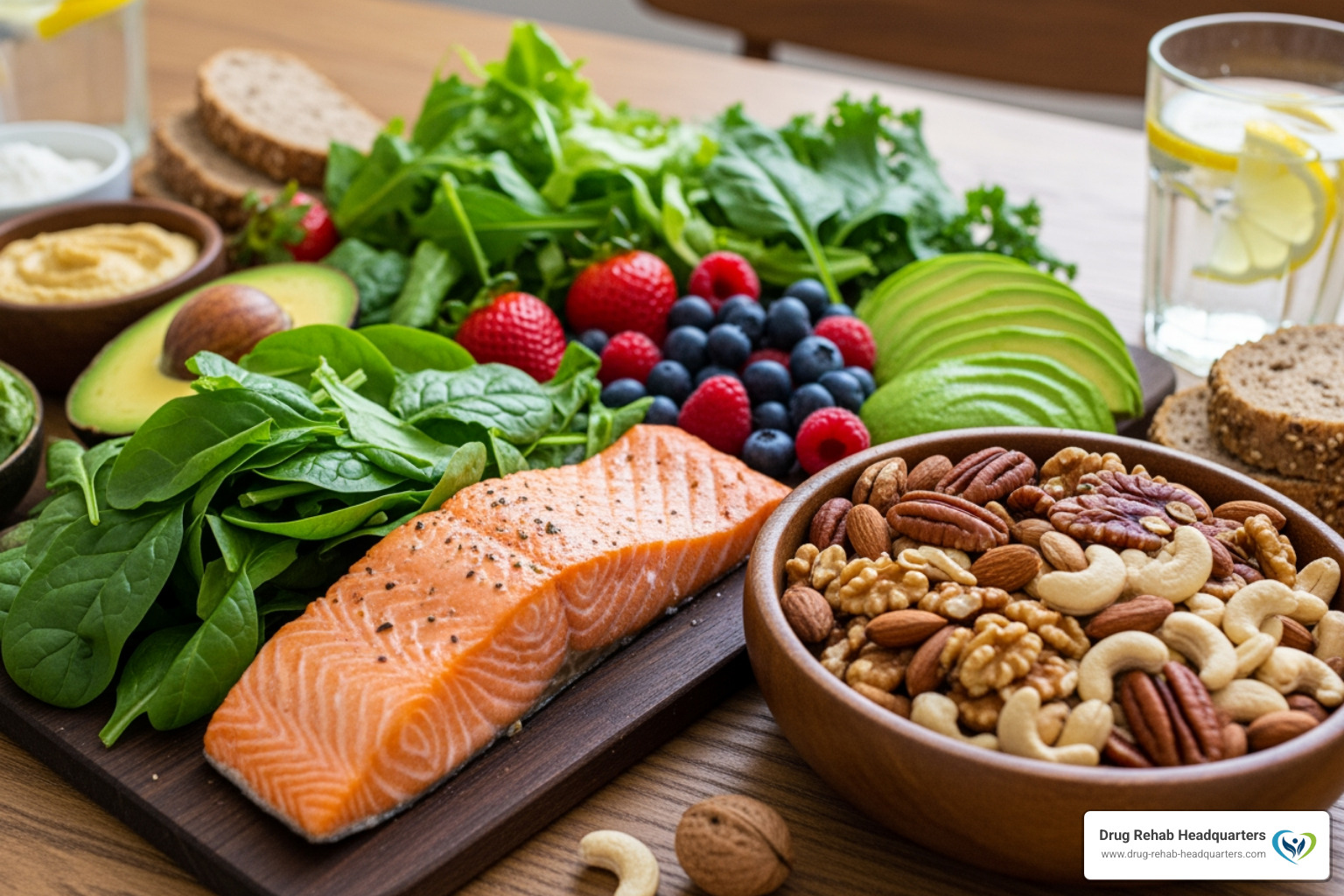
- Healthy Fats: Crucial for brain health and reducing inflammation. Incorporate avocados, nuts, seeds, olive oil, and fatty fish like salmon.
- Fiber-Rich Foods: Vital for digestive health, regulating blood sugar, and alleviating constipation. Good sources include fruits, vegetables, whole grains, and nuts.
- Probiotics: A healthy gut influences brain health and mood. Probiotic-rich foods like yogurt, kefir, and kimchi help restore beneficial gut bacteria.
The key is a pattern of balanced, regular meals and snacks. This helps regulate hunger, stabilize blood sugar, and decrease mood swings. For more specific guidance, explore our nutrition guide for recovery.
Managing Cravings and Withdrawal with Nutrition
In early Nutrition addiction recovery, nutrition is a powerful tool for managing intense cravings and withdrawal symptoms.
- Stabilizing Blood Sugar: Maintain stable blood sugar with regular, balanced meals combining complex carbs, protein, and healthy fats. This prevents energy crashes that trigger cravings.
- Avoiding Caffeine and Sugar Spikes: Excessive caffeine and sugar can worsen anxiety and sleep issues, mimicking withdrawal symptoms. Limiting them helps avoid “addiction transfer” and breaks the craving cycle.
- Hydration with Electrolytes: Dehydration is common during withdrawal. Drink plenty of water and electrolyte-rich beverages like coconut water to manage physical symptoms.
- Easily Digestible Foods During Detox: If you have nausea, opt for bland, easy-to-digest foods like soup, rice, or yogurt. Gradually reintroduce nutrient-dense foods as appetite returns.
- Fiber for Constipation: For those recovering from opioid use, increase fiber from fruits, vegetables, and whole grains, along with hydration, to alleviate constipation.
- Distinguishing Hunger from Cravings: Learn to tell the difference between physical hunger and emotional cravings. Pausing to assess the feeling is empowering; often, a healthy snack or water will suffice.
Using nutrition strategically can ease withdrawal discomfort and provide control over cravings, paving the way for successful recovery. For comprehensive support, see our guide to managing withdrawal symptoms.
Creating a Sustainable and Holistic Recovery Lifestyle
Nutrition addiction recovery is a commitment to a sustainable, holistic lifestyle for long-term sobriety. Integrating healthy eating with other practices creates a foundation for relapse prevention and well-being. True healing encompasses physical, mental, and emotional health. Our comprehensive rehabilitation services emphasize these strategies, helping individuals build resilient lives in recovery.
The Dangers of Fad Diets in Recovery
While tempting, fad or crash diets are detrimental in recovery. They promise quick, unsustainable results and pose unique risks:
- Nutrient Deficiencies: Restrictive diets can worsen existing nutrient deficiencies in a body that is already depleted and trying to heal.
- Increased Stress: The rigid rules and deprivation of fad diets can increase stress and anxiety, which are significant relapse triggers.
- Disordered Eating Patterns: Restrictive dieting can trigger or worsen disordered eating patterns, as individuals in recovery are vulnerable to new compulsive behaviors.
- Unrealistic Expectations: The unsustainable nature of these diets leads to a cycle of weight loss and regain, which can be disheartening and undermine self-efficacy.
- Yo-Yo Dieting Effects: This cycle strains the body and fosters a sense of lost control, which is counterproductive to recovery.
In early recovery, prioritize consistent, balanced eating to nourish the body and mind. Avoiding relapse is more important than sticking to a strict diet.
Complementing Nutrition with Exercise
Exercise is a powerful ally in Nutrition addiction recovery, working with healthy eating to promote physical and mental healing.
- Endorphin Release: Exercise releases endorphins, the body’s natural mood elevators, which can reduce anxiety and depression.
- Stress Reduction: Regular exercise is an excellent way to manage stress and provides a constructive outlet for emotional energy.
- Improved Sleep Quality: Consistent physical activity can significantly improve sleep patterns, which are often disturbed in recovery.
- Increased Self-Esteem: Achieving fitness goals boosts self-esteem and provides a sense of accomplishment and control.
- Building Healthy Routines: Exercise helps establish the structure and routine vital for stability in recovery.
- Community and Support: Group activities like sports or classes can foster community and combat isolation.
- Variety of Activities: Options range from calming yoga and hiking to vigorous swimming or strength training.
Together, nutrition and exercise create a holistic foundation that strengthens the body, stabilizes the mind, and empowers individuals in Nutrition addiction recovery.
Advocating for Nutrition in Your Treatment Plan
Despite its importance, nutrition is often overlooked in treatment. With few centers offering nutritionists or education, individuals must advocate for themselves to ensure this crucial aspect of recovery is addressed.
Here’s how to advocate for nutrition in your treatment plan:
- Educate Yourself: Learn about nutrition’s benefits for SUD recovery to better discuss your needs.
- Ask Questions: Ask providers about their nutrition offerings, such as access to a registered dietitian.
- Express Your Desire: Clearly state that you want nutrition included in your recovery plan.
- Discuss Your Needs: Talk to your team about your eating habits, concerns, and goals, like learning meal planning or healthy cooking.
- Seek Educational Opportunities: Ask about cooking classes or nutrition workshops. Many centers are expanding their holistic offerings.
- Emphasize Individualization: Remind providers that your nutrition plan should be customized to your personal history and needs.
By engaging in these conversations, you can ensure your recovery includes the nutritional support needed for lasting sobriety. We at Drug Rehab Headquarters can help you find the right addiction treatment center that prioritizes these holistic approaches.
Frequently Asked Questions about Nutrition and Recovery
Can changing my diet really help me stay sober?
Yes. A better diet significantly improves your chances of sustained sobriety. Proper nutrition helps stabilize mood, reduce cravings by balancing blood sugar and neurotransmitters, and repair physical damage. This creates a stronger physical and mental foundation, making it easier to manage stress and reduce relapse risk. It’s a critical part of holistic Nutrition addiction recovery.
What are the first nutritional steps I should take in early recovery?
In early recovery, focus on these foundational steps:
- Hydration: Drink plenty of water and electrolyte-rich fluids.
- Regular Meals: Eat small, frequent, balanced meals to stabilize blood sugar.
- Easily Digestible Foods: Start with nourishing, easy-to-digest foods like soups, lean protein, and rice, especially if you have nausea.
- Avoid Extremes: Limit excessive sugar and caffeine, which can worsen anxiety and sleep problems.
Consulting a healthcare professional or registered dietitian is highly recommended.
How do I handle intense sugar cravings in recovery?
Sugar cravings are common as the brain’s reward system seeks a substitute. To manage them:
- Eat Regular, Balanced Meals: This prevents blood sugar crashes that trigger cravings.
- Choose Healthy Alternatives: Opt for natural sweets like fresh fruit or a small amount of dark chocolate.
- Stay Hydrated: Thirst can sometimes feel like a craving. Try drinking water first.
- Consider L-Glutamine: This supplement may help, but always consult a doctor or nutritionist first.
- Mindful Awareness: Recognize that cravings are often temporary and emotional. Find healthy distractions.
Conclusion
The journey of Nutrition addiction recovery requires dedication and a holistic approach. Nutrition is more than fuel; it’s a fundamental pillar that impacts your body’s ability to repair, your brain’s capacity to rebalance, and your resilience against relapse. By addressing malnutrition and providing essential nutrients, a healthy diet empowers you to reclaim your health.
Understanding the link between food and mood gives you a powerful tool for self-care and sobriety. Informed food choices, regular exercise, and advocating for nutritional support are crucial steps for building a healthy future. This commitment offers long-term health benefits, mental clarity, and a solid foundation for recovery.
At Drug Rehab Headquarters, we understand the critical role nutrition plays in this journey. We are dedicated to connecting individuals with treatment centers across our nationwide network that integrate comprehensive nutritional support into their programs. For personalized guidance on finding a treatment center that fits your needs, contact Drug Rehab Headquarters for free, 24/7 assistance. Don’t let financial concerns be a barrier; you can verify your insurance for treatment through our website.