The Crisis of Untreated Addiction in America
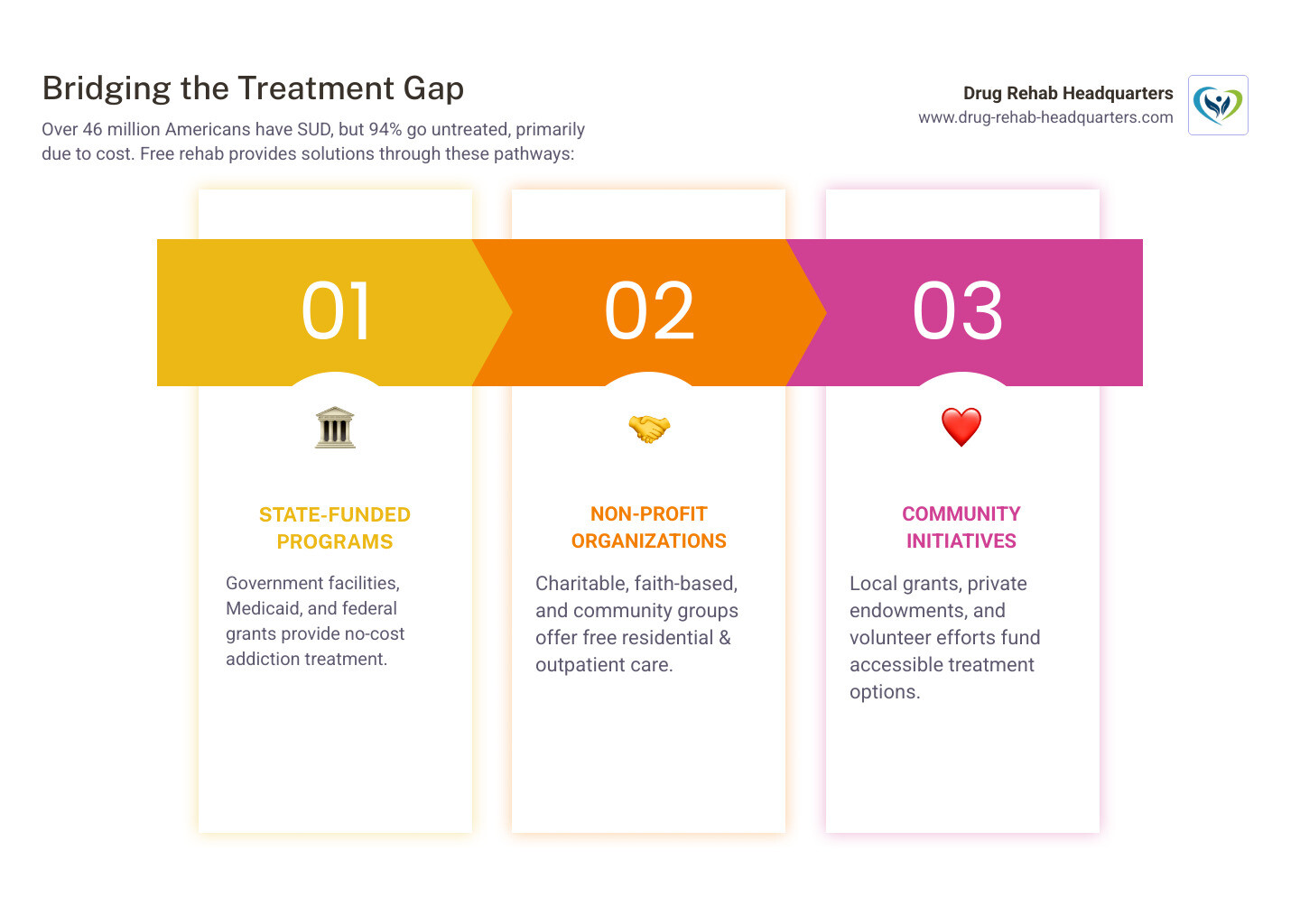
Free drug rehab programs provide addiction treatment at no cost through state-funded facilities, non-profit organizations, and community-based centers. Here’s how to access them:
- State-funded programs: Contact your state’s DHHS or use the SAMHSA Treatment Locator to find government-funded facilities
- Non-profit organizations: Faith-based centers and charitable groups offer free residential and outpatient care
- Eligibility requirements: Most programs require proof of income, residency, and lack of insurance
- Services included: Medical detox, individual and group therapy, medication-assisted treatment, and aftercare planning
- Wait times: Expect potential waiting lists; use outpatient services or support groups while waiting
Over 46 million Americans aged 12 or older have a substance use disorder, yet according to the Substance Abuse and Mental Health Services Administration, 94% of those people did not receive any treatment. For many, the biggest barrier is cost. People suffering from addiction often believe professional help is financially out of reach, so they never take the first step toward recovery.
Treatment, however, doesn’t have to cost thousands of dollars. Free and low-cost options exist across the country, funded by state programs, federal grants, non-profit organizations, and community initiatives. These programs can offer the same evidence-based therapies—medical detox, counseling, medication-assisted treatment, and aftercare support—that private facilities provide.
The challenge usually isn’t whether help exists. It’s knowing where to look and how to qualify.
More info about the Cost of Rehab
At Drug Rehab Headquarters, we’ve helped thousands of individuals and families steer the complex landscape of addiction treatment, including connecting them with free drug rehab options nationwide. Our mission is simple: ensure that cost never stands between you and recovery.
Understanding the Landscape of Free Drug Rehab
When we talk about “free” drug rehab, it doesn’t mean the treatment is low quality or that it magically appears without cost. It means your care is covered by funding sources so that people who need help, regardless of their financial situation, can access life-saving treatment. These programs are supported by government grants, charitable donations, and private endowments that work together to bridge the treatment gap in the U.S.
The National Survey of Substance Abuse Treatment Services (N-SSATS) 2018 found that about 45% of treatment centers provided free or minimal payment options for those unable to afford rehab. Every dollar invested in addiction treatment yields a strong return in reduced drug-related crime, theft, and healthcare costs, making these programs a win for individuals and communities.
What are the different types of free drug rehab programs available?
Finding free drug rehab might seem overwhelming, but these programs exist in many forms across the country. They are typically categorized by their funding source and organizational structure. Understanding these categories can help you narrow your search and identify the best fit for your needs.
- State and Local Programs: Funded by state and local governments, these facilities often serve as a safety net for individuals who are uninsured or underinsured.
- Non-Profit Organizations: Charitable organizations with a history of community service may operate addiction treatment centers that rely on donations, grants, and volunteers to provide services at no or very low cost.
- Community-Funded Centers: Smaller, local initiatives funded by community efforts, local businesses, and individual donors. These programs are often deeply connected to the local community and may offer culturally sensitive care.
- Faith-Based Initiatives: Religious organizations sometimes offer programs that integrate spiritual guidance with addiction treatment, ranging from residential programs to free support groups.

If you’re feeling lost in the search, support is available. You can always Contact Drug Rehab Headquarters for local resources and help finding options near you.
The role of state and local programs
State-funded rehab facilities are a cornerstone of accessible addiction treatment in the United States. These programs use public funding distributed by individual states to offer a wide range of addiction treatment services. This includes everything from medication-assisted detox and residential rehab to outpatient treatment programs for those struggling with drug and alcohol addictions.
States across the country maintain state-funded or supported programs. These facilities are often the first line of defense for individuals with no health insurance, low income, or significant financial need.
A significant portion of this funding comes from federal initiatives like substance use treatment block grants. These grants are designed to fund treatment for individuals without insurance or those whose treatment isn’t fully covered by Medicaid, Medicare, or private health insurance. Federal agencies within the U.S. Department of Health and Human Services play a crucial role in ensuring that vital services reach those who need them most.
Medicaid and Medicare also play a pivotal role. The Affordable Care Act (ACA) mandates that substance use disorder treatment is considered an essential health benefit, meaning that all Marketplace health insurance plans and most individual and small group plans must cover it. Medicaid expansion programs under the ACA are required to include substance use treatment services. While each state determines its specific eligibility requirements and the extent of coverage, these programs can significantly reduce or eliminate out-of-pocket costs for eligible individuals. It’s worth noting that some centers may not accept Medicaid, so it’s always wise to confirm before enrolling.
State and local programs often prioritize certain populations, such as pregnant women, Veterans, and individuals with a history of intravenous drug use, ensuring that those with the most urgent needs receive timely care.
To find out more about how these programs can help you, you can explore general resources on Addiction Treatment.
Are there community or non-profit free rehab options?
Yes. Beyond government-funded initiatives, a large network of community and non-profit organizations provides free drug rehab and support services. These organizations often fill crucial gaps, offering specialized programs and a strong sense of community that can be very helpful for recovery.
Community support also shines through in peer-led recovery groups, which are often free or operate on a voluntary donation basis. Mutual-help groups such as 12-step meetings and science-based self-help programs use mentors and self-organized support groups to guide individuals through recovery. These meetings are usually free, though a small contribution for operational costs might be suggested.
What can you expect from these programs? While luxury amenities might be absent, many centers provide strong community bonds, evidence-based therapies, and a supportive environment. Some programs integrate spiritual or holistic principles into their treatment, offering a whole-person approach to healing. They might require participants to adhere to certain guidelines or participate in specific activities, which can be a powerful motivator for some. It’s always a good idea to ask about the program’s approach and services to ensure they fit your personal values.
How to Find and Qualify for No-Cost Treatment
Navigating addiction treatment can feel like a maze, especially when you’re looking for free drug rehab options. This section outlines practical steps to help you locate and qualify for the support you need.
How can individuals find free drug rehab centers near them?
Finding free drug rehab centers near you is more accessible than many people think, thanks to resources designed to connect you with care.
- SAMHSA’s Behavioral Health Treatment Services Locator: The SAMHSA Behavioral Health Treatment Services Locator lets you search for rehab centers by location and service type. You can also call their free National Helpline at 1-800-662-HELP (4357) for treatment referral and information, 24/7.
- SAMHSA’s Directory of Single State Agencies (SSAs): The Directory of Single State Agencies (SSAs) for Substance Abuse Services lists the government agencies responsible for rehabilitation programs in your state. These agencies can direct you to nearby and affordable treatment options.
- Local Health Departments (DHHS): Your local Department of Health and Human Services (DHHS) can provide information on local addiction treatment options, financial assistance programs, and help you determine eligibility for Medicaid or Medicare.
- Community Resource Directories: Many states and local communities maintain online or physical directories of health and social services. Searching for “[Your State] addiction treatment resources” or “[Your City] free rehab” can yield helpful results.
- Contacting Centers Directly: Reach out to local substance abuse, mental, or behavioral health services directly. Many centers, even private ones, offer sliding-scale fees, scholarships, or can connect you to free drug rehab programs.
- Drug Rehab Headquarters: A dedicated concierge service is available to help you find suitable options. Contact Drug Rehab Headquarters for guidance and certified counselors, many with lived experience, can help you steer the options and connect you with evidence-based, holistic treatment programs across North America, focusing on the listed US states.

In an emergency, always call 911 or go to the nearest emergency room.
What are the eligibility requirements for free drug rehab centers?
Free drug rehab programs have specific criteria to ensure they serve those most in need. Eligibility requirements vary by funding source (state, federal, non-profit) and by program, but common factors include:
- Demonstrated Financial Need: Programs usually ask for proof of income, tax returns, pay stubs, or other financial documents to verify inability to pay for treatment. Some may use a sliding-scale fee based on income.
- Residency Verification: Most state-funded programs require proof of residency in that particular state or county, such as a driver’s license or utility bill.
- Lack of Insurance or Underinsurance: If you have no health insurance, or if your insurance doesn’t cover addiction treatment, you’re more likely to qualify. High deductibles or limited coverage may also be taken into account.
- U.S. Citizenship or Legal Residency: Federal and state-funded programs generally require proof of U.S. citizenship or legal residency.
- Clinical Assessment for Addiction: A medical professional or addiction specialist will conduct an assessment to confirm a diagnosis of a substance use disorder and determine the appropriate level of care.
- Agreement to Follow Program Guidelines: All programs require agreement to their rules, regulations, and treatment plans.
- Priority Populations: Some programs prioritize specific groups, such as pregnant women, parents with dependent children, Veterans, or individuals with co-occurring mental health disorders.
These requirements help allocate limited resources effectively. While the paperwork can feel like a hurdle, it is a necessary step to access valuable care.
We can help you steer these requirements and explore your options. Explore our Rehabilitation Services to learn more about the different types of programs available.
What to Expect: Services, Process, and Program Types
When considering free drug rehab, it’s natural to wonder what the experience will be like. While the cost may be covered, the core components of effective addiction treatment remain consistent, focusing on healing the body and mind.
What services are typically included in free drug rehab programs?
Many free drug rehab programs offer a range of evidence-based services designed to support lasting recovery. The specific offerings can vary by facility, but generally, you can expect:
- Medically Supervised Detox: Often the first step, especially for substances like alcohol, opioids, and benzodiazepines, where withdrawal can be dangerous. Medically supervised Detox helps manage withdrawal symptoms safely.
- Individual Counseling: One-on-one therapy sessions with a trained counselor address root causes of addiction, develop coping mechanisms, and process trauma. Therapies like Cognitive Behavioral Therapy (CBT) and Dialectical Behavior Therapy (DBT) are commonly used.
- Group Therapy: Sharing experiences in a supportive group promotes connection, reduces isolation, and offers multiple perspectives on recovery.
- Medication-Assisted Treatment (MAT): For some opioid and alcohol use disorders, MAT combines behavioral therapy with medications (such as buprenorphine or naltrexone) to reduce cravings, prevent relapse, and support long-term recovery.
- Educational Workshops: Sessions that explain the science of addiction, relapse prevention strategies, healthy lifestyle choices, stress management, and building positive relationships.
- Aftercare Planning: Support for transitioning from formal treatment back into daily life. This can include sober living referrals, ongoing therapy, support groups, and vocational or educational resources.
While private facilities might offer more amenities, the core components of quality addiction treatment—medical care, counseling, supervision, support, and education—are often available in well-run free drug rehab programs.
The process of rehabilitation and program duration
Rehabilitation typically follows several phases, each building on the last:
- Intake and Assessment: A thorough evaluation of physical and mental health, substance use history, and personal circumstances. This informs an individualized treatment plan.
- Detoxification: When medically necessary, this supervised process helps safely clear substances from the body and manage withdrawal.
- Therapy and Counseling: The main treatment phase, usually involving individual, group, and sometimes family therapy to address underlying issues and build coping skills.
- Life Skills and Holistic Approaches: Many programs include life skills training, vocational guidance, and optional holistic approaches such as mindfulness or recreation activities to support overall well-being.
- Aftercare and Relapse Prevention: Preparing for life after the program through relapse-prevention strategies, ongoing support, and connection with community resources.
Program duration varies based on individual needs, addiction severity, and program capacity. Some programs offer shorter stays (around 28–30 days), while others extend to 60 or 90 days. Recovery housing or ongoing support may last several months to a year. The key is staying engaged long enough to build a solid foundation for long-term sobriety.
Inpatient vs. Outpatient: What free options are available?
When it comes to treatment structure, the two main types are inpatient (residential) and outpatient. Free drug rehab options may be available for both, depending on your location and eligibility.
| Feature | Inpatient (Residential) Treatment | Outpatient Treatment |
|---|---|---|
| Where you live | You stay at the facility 24/7 during treatment. | You live at home and attend scheduled treatment sessions. |
| Level of structure | Highly structured daily schedule with therapy, groups, and activities. | More flexible; sessions are scheduled around work, school, or family obligations. |
| Intensity of care | Best suited for moderate to severe addiction, unsafe home environments, or when 24/7 support is needed. | Often suited for mild to moderate addiction, or as a step-down after inpatient care. |
| Support availability | Continuous access to staff and peers in recovery. | Support is provided during visits; you rely more on community and home support between sessions. |
| Typical time commitment | Most of your time is spent in treatment-related activities. | Varies from a few hours per week to several days per week, depending on program intensity. |
| Common free options | State-funded residential programs, some non-profit or faith-based homes. | State-funded outpatient clinics, community health centers, and counseling programs. |
Learn about different Treatment Options
Alternatives if You Don’t Qualify for Free Rehab
If you’ve explored options for free drug rehab and found that you don’t meet eligibility requirements, or if the waitlists are too long for your situation, there are still many ways to make addiction treatment more affordable and accessible.
How to pay for treatment without free options
The cost of rehab can be a hurdle, but it doesn’t have to stop you from getting help. Consider the following strategies:
-
Leverage Your Health Insurance: Thanks to the Affordable Care Act (ACA), addiction treatment is classified as an essential health benefit. This means that all Marketplace health insurance plans, and most individual and small group plans, are required to cover substance use and mental health disorders. If you have insurance, contact your provider to understand your benefits.
For help reviewing your coverage, see: Does Insurance Cover Rehab?
-
Sliding-Scale Fees: Many treatment centers offer a sliding-scale fee structure, where the cost of treatment is adjusted based on your income and ability to pay.
- Payment Plans: Some facilities will work with you to create a payment plan, allowing you to pay off treatment costs in installments over time.
- Grants and Scholarships: Certain organizations and treatment centers offer grants and scholarships specifically for addiction treatment. Funding may also be available through clinical research or local charitable programs.
- Healthcare Loans: Specialized lenders sometimes provide loans for healthcare expenses, including addiction treatment. While this involves taking on debt, it can make treatment immediately accessible.
- Employee Assistance Programs (EAPs): If you’re employed, check whether your company offers an EAP. These programs can provide confidential counseling, referrals, and in some cases financial assistance for addiction treatment.
- Support from Family and Friends: Loved ones may be willing to help financially or with practical support like childcare, transportation, or time off work so you can attend treatment.
The goal is to get you into appropriate care. It often takes persistence and creativity to combine resources—but help is possible.
Are there specialized programs for veterans?
Yes. Veterans who have served the country often have access to dedicated resources for addiction treatment.
Veterans Affairs (VA) Health Care provides extensive treatment for substance use disorders. In some cases, especially when treatment is related to military service, care can be provided at little or no cost. The VA offers services such as:
- Detoxification services
- Inpatient and outpatient treatment programs
- Medication-assisted treatment (MAT)
- Individual and group therapy
- Support for co-occurring mental health conditions
- Aftercare planning and relapse prevention
Many VA medical centers have specialized addiction treatment programs, and certain facilities participate in community care programs, allowing eligible Veterans to receive care from approved non-VA providers when criteria are met. The ACA also helps ensure that substance use and mental health treatment are covered benefits in most health plans.
Eligibility for Veterans: If you are a Veteran or active military personnel, your VA benefits can be a powerful tool for accessing treatment. Contact your local VA facility or the Veterans Health Administration to understand your specific benefits and how to enroll in their substance use disorder treatment programs.
How to apply: You can start by contacting your local VA medical center or visiting the VA’s website on Veterans Affairs Health Care provides treatment for substance use disorders. They will guide you through assessment and enrollment.
For personalized guidance on accessing veteran resources, you can also Contact us for veteran resources.
Frequently Asked Questions about Free Rehab
We know navigating free drug rehab can raise many questions. Here are answers to some of the most common ones.
How long is a stay in a free rehab program?
The duration of a stay in a free drug rehab program varies. It depends on your needs, the severity of the addiction, and the services the facility provides.
- Individual Assessment: Everyone entering rehab receives an assessment to determine the most appropriate length of stay.
- Program Capacity: Availability of beds and funding for extended stays can influence program length in state-funded or non-profit facilities.
- Typical Durations: Some programs offer intensive stays of about 28–30 days. Many residential programs fall within the 60 to 90-day range.
- Longer-Term Options: For severe or chronic substance use disorders, or for people with co-occurring mental health conditions, longer-term residential programs or sober living environments lasting several months to a year may be recommended.
The goal is to provide enough time for safe detox, meaningful therapy, skill-building, and a strong aftercare plan.
Are free rehab centers effective?
Yes, free rehab centers can be effective. The success of a program is determined more by the quality of care and your engagement than by the price tag.
- Evidence-Based Care: Many free drug rehab programs, especially state-funded and reputable non-profits, use therapies proven effective in treating substance use disorders, such as CBT, DBT, and MAT.
- Better Than No Treatment: Research shows that any structured treatment is better than no treatment. For people facing financial barriers, free rehab can be a vital lifeline.
- Qualified Staff: Many centers employ certified counselors, licensed therapists, and medical professionals dedicated to helping individuals achieve sobriety.
- Core Components of Quality Care: Free programs typically include medical detox (when needed), individual and group therapy, and aftercare planning.
Facilities may have more basic surroundings or larger groups than private centers, but those differences do not necessarily impact the quality of clinical care.
What if there’s a waiting list for free treatment?
Waiting lists for free drug rehab are common due to high demand. While frustrating, there are important steps you can take while you wait:
- Stay Engaged with Support: Attend free peer-support meetings in your community, such as 12-step or other recovery groups.
- Use Outpatient Counseling: If available and affordable, consider outpatient counseling or therapy to begin addressing issues and building coping skills.
- Contact Helplines for Interim Support: Helplines like SAMHSA’s National Helpline (1-800-662-HELP) can provide ongoing support, information, and referrals.
- Stay in Contact with the Facility: Regularly check in with the program where you’re on the waiting list to confirm your interest and ask about openings.
- Explore Alternatives: Continue researching other free drug rehab options, grants, scholarships, or lower-cost outpatient programs.
Any step toward recovery is progress. For additional guidance and to explore more options, visit our Resources page.
Your Path to Recovery Starts Today
The journey to recovery is challenging, but it is possible for anyone, regardless of financial situation. The availability of free drug rehab options, state-funded programs, non-profit initiatives, and various financial aid avenues means that cost does not have to be an impossible barrier to getting help.
Taking the first step can feel overwhelming, and navigating the complex landscape of addiction treatment is rarely easy. You do not have to do it alone.
At Drug Rehab Headquarters, our team offers 24/7 free support from certified counselors, many of whom have personal experience with addiction and recovery. This combination of professional training and lived experience allows us to offer compassionate and practical guidance.
Our counselors are here to listen, understand your circumstances, and help you steer your options. We can assist you in finding suitable, evidence-based, and holistic treatment programs that fit your needs, connecting you with resources across our listed US states.
Your path to a healthier, substance-free life can start today. If you are ready to explore treatment options, reach out and let us help you find the right Addiction Treatment Center for you.