Understanding Your Options for Drug Treatment Centers in Tennessee
Drug treatment centers in Tennessee offer a range of services to help individuals overcome substance use disorders and reclaim their lives. If you’re searching for treatment, here’s what you need to know right away:
Quick Guide to Tennessee Treatment Options:
| Level of Care | Best For | Typical Duration |
|---|---|---|
| Detox | Medically supervised withdrawal | 3-7 days |
| Inpatient/Residential | Severe addiction, need for 24/7 support | 30-90 days |
| Partial Hospitalization (PHP) | Transitioning from inpatient care | 2-6 weeks |
| Intensive Outpatient (IOP) | Moderate addiction, maintaining work/home | 8-12 weeks |
| Outpatient | Mild addiction, strong support system | 3-6 months |
Important Resources:
- Tennessee REDLINE: 800-889-9789 (free, confidential referrals)
- Drug Rehab Headquarters: 866-720-3784 (24/7 helpline)
The reality is stark. Tennessee saw almost 4,000 drug overdose deaths in 2022, according to the Tennessee Department of Health. Behind each statistic is a person—someone’s family member, friend, or colleague—who needed help but may not have found it in time.
But there’s hope. Recovery is possible, and choosing the right treatment center is the crucial first step on that journey.
The challenge? Tennessee has hundreds of treatment facilities, each offering different programs, payment options, and approaches to care. Some specialize in opioid addiction. Others focus on co-occurring mental health disorders. Some are luxury residential programs in the mountains, while others are state-funded outpatient clinics.
How do you know which one is right for you or your loved one?
That’s exactly what this guide will help you figure out.
At Drug Rehab Headquarters, we’ve dedicated our work to connecting individuals and families with the right addiction treatment resources across the country, including comprehensive options for drug treatment centers in Tennessee. We understand that finding the right help can feel overwhelming, which is why we’re here to break down what you need to know before making this life-changing decision.
For immediate, confidential assistance, you can reach our 24/7 helpline at 866-720-3784.
1. Understanding the Scale of Addiction in Tennessee
It’s impossible to talk about drug treatment centers in Tennessee without first acknowledging the significant challenge the state faces with addiction. The statistics paint a sobering picture, but they also underscore the urgent need for accessible and effective treatment options.

Tennessee, like many other states, has been hit hard by the opioid epidemic. The Tennessee Department of Health reported that nearly 4,000 drug overdose deaths occurred in the state in 2022 alone. This isn’t just about opioids; it encompasses a range of substances that are devastating lives and communities. Crossroads, a treatment provider in Tennessee, highlights this crisis, noting their strategic placement of centers in counties with the highest overdose rates to combat this epidemic head-on.
What makes the situation even more complex is the prevalence of co-occurring disorders, often referred to as dual diagnosis. This means that a person struggles with both a substance use disorder and a mental health disorder simultaneously. Research from the National Institute of Mental Health (NIMH) indicates that approximately 50% of people with substance use disorders also have a dual diagnosis. Common mental health conditions that often accompany addiction include anxiety, depression, PTSD, and bipolar disorder.
The importance of integrated treatment for dual diagnosis cannot be overstated. Treating only the addiction without addressing the underlying mental health issues, or vice versa, often leads to relapse. Effective drug treatment centers in Tennessee recognize this and offer programs that simultaneously tackle both aspects, providing a more holistic and sustainable path to recovery.
Understanding the scope of addiction in Tennessee helps us appreciate the critical role that quality treatment centers play. It also emphasizes why finding the right help is not just beneficial, but often life-saving.
Need help understanding your options? Call Drug Rehab Headquarters at 866-720-3784.
2. The Different Levels of Care Available
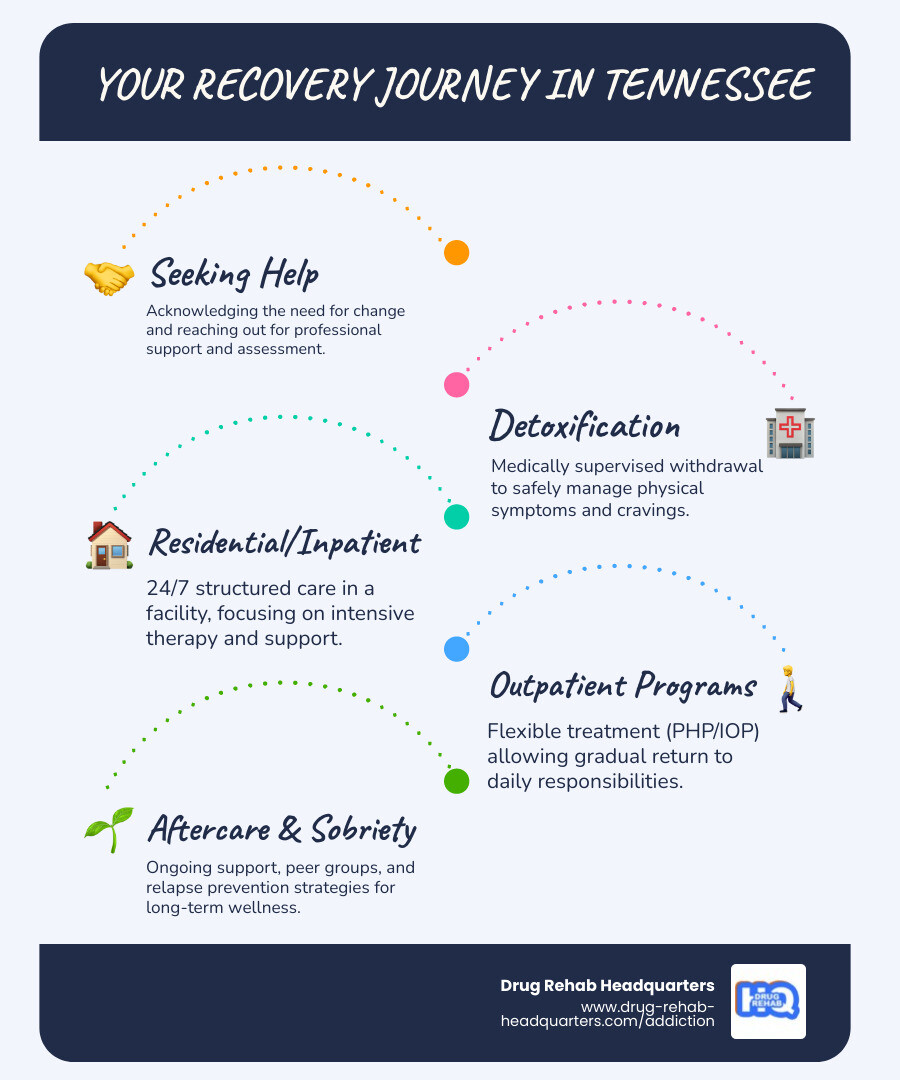
When exploring drug treatment centers in Tennessee, you’ll quickly learn that addiction treatment is not a one-size-fits-all solution. Instead, it’s typically structured as a “continuum of care,” meaning there are various levels of intensity designed to meet different needs. This approach ensures that individuals receive the most appropriate support at every stage of their recovery journey.
Many programs, like Mirror Lake, emphasize a phased treatment approach, which encourages increasing independence as recovery progresses, facilitating a smoother transition back into daily life. The Tennessee Department of Mental Health and Substance Abuse Services (TDMHSAS) also outlines a comprehensive continuum of care, guided by the American Society of Addiction Medicine (ASAM) Criteria, which helps match a person’s needs to the right program intensity.
What Types of Drug Treatment Centers in Tennessee Are There?
Here’s a breakdown of the common levels of care you’ll find in Tennessee:
- Detoxification (Withdrawal Management): This is often the first step, especially for severe substance dependencies. It involves medically supervised withdrawal from drugs or alcohol to safely manage acute physical symptoms. This can be “clinically-managed” (social withdrawal management) or “medically-monitored” (medical withdrawal management), depending on the severity and risk of withdrawal symptoms.
- Inpatient/Residential Treatment: For those requiring 24/7 support and a highly structured environment, residential programs are ideal. Clients live at the facility and engage in intensive therapy, counseling, and support groups. These programs provide a safe, drug-free environment away from triggers. The Ranch TN, for instance, emphasizes a scenic and calming environment in central Tennessee as a backdrop for recovery.
- Partial Hospitalization Programs (PHP): PHPs offer a high level of care, similar to inpatient, but clients return home in the evenings. They attend therapy and treatment sessions for several hours a day, multiple days a week. This is often a step-down from residential care or for individuals who need intensive support but have a stable home environment.
- Intensive Outpatient Programs (IOP): IOPs provide structured therapy and education for several hours per week, allowing individuals to live at home and maintain work or school commitments. It’s less intensive than PHP but still offers significant support.
- Standard Outpatient Services: This is the least intensive level of care, involving weekly therapy sessions and support groups. It’s suitable for individuals with milder substance use disorders or as a long-term aftercare option following more intensive treatment.
- Sober Living Homes: These are transitional residences that provide a supportive, drug-free environment for individuals in recovery. While not clinical treatment centers, they offer accountability and a community setting to practice newly learned coping skills and reintegrate into society.
The TDMHSAS, a key resource for drug treatment centers in Tennessee, outlines these levels of care, ensuring that Tennesseans have access to a full spectrum of services. Their continuum ranges from outpatient services to various forms of residential rehabilitation and withdrawal management, guided by ASAM criteria.
Our team at Drug Rehab Headquarters can help you find the right level of care—call 866-720-3784.
3. Finding a Program That Fits Your Unique Needs
Choosing among the many drug treatment centers in Tennessee means looking beyond just the location or the basic services offered. The most effective treatment is personalized, addressing your unique history, challenges, and goals. We believe that finding the right fit is absolutely key to long-term success in recovery.
Many centers prioritize evidence-based treatment, which means using therapeutic approaches that have been scientifically proven to be effective. This can include individual counseling, group therapy, family therapy, and cognitive-behavioral therapy (CBT), among others. Beyond these core methods, many facilities also incorporate holistic therapies like yoga, meditation, art therapy, and music therapy to support overall well-being. Trauma-informed care is also crucial, recognizing that past trauma often plays a significant role in addiction.
The “best rehab is one that meets your needs,” as Recovery.com rightly points out. This means considering what makes you, or your loved one, unique.
Need help sorting through options? Call Drug Rehab Headquarters specialists at 866-720-3784 for a free consultation.
Specialized Treatment Tracks
Many drug treatment centers in Tennessee offer specialized programs custom to specific demographics or needs:
- Men’s Rehab and Women’s Rehab: These gender-specific programs create a safe space for individuals to address issues unique to their gender, fostering deeper connection and understanding without the distractions of mixed-gender environments. The Ranch TN, for example, offers both Men’s and Women’s Rehab Center Programs.
- LGBTQ+ Friendly Programs: These programs provide an inclusive and affirming environment for lesbian, gay, bisexual, transgender, and queer individuals, addressing specific challenges and stigmas they may face.
- Veteran Support Programs: Recognizing the unique experiences and traumas faced by service members, some centers offer specialized support for veterans. American Addiction Centers (AAC) highlights its dedicated program and staff support for veterans, and Crossroads also accepts TRICARE and VA CCN.
- Young Adult Programs: Custom for individuals typically aged 18-25, these programs consider the developmental stage of young adults, focusing on identity formation, education, and career planning alongside recovery.
- Executive Rehab: Designed for professionals, these programs often provide more privacy and amenities, with the flexibility to manage work responsibilities while in treatment.
Treatment for Co-Occurring Disorders
As we discussed, a significant portion of individuals with substance use disorders also experience mental health conditions. Integrated mental healthcare, often called dual diagnosis treatment, is essential in these cases. This approach ensures that both the addiction and the accompanying mental health disorders are treated simultaneously by a team of specialists. Common mental health conditions addressed include:
- Anxiety disorders
- Depression
- Post-Traumatic Stress Disorder (PTSD)
- Bipolar disorder
- Schizophrenia
- Personality disorders
By addressing these co-occurring issues together, drug treatment centers in Tennessee can provide a more comprehensive and effective path to lasting recovery.
Let Drug Rehab Headquarters guide you to a program that meets your needs—call 866-720-3784.
4. How to Verify a Center’s Quality and Legitimacy
When you’re entrusting a drug treatment center in Tennessee with your, or a loved one’s, health and future, it’s paramount to ensure that the facility is legitimate, reputable, and provides high-quality care. This isn’t just about comfort; it’s about efficacy and safety.
Accreditation is a critical indicator of a center’s commitment to quality. These organizations set rigorous standards for patient care, safety, and ethical practices. When a facility is accredited, it means it has voluntarily undergone a thorough evaluation by an independent third party and met specific benchmarks.
Beyond accreditation, consider these factors:
- Staff Qualifications: Are the therapists, counselors, medical staff, and support personnel licensed, certified, and experienced in addiction treatment?
- Evidence-Based Practices: Does the center primarily use therapeutic methods that are supported by scientific research? American Addiction Centers emphasizes its specialization in evidence-based treatment.
- Patient-to-Staff Ratio: A lower patient-to-staff ratio often indicates more personalized attention and care.
- Treatment Philosophy: Does the center align with your beliefs? Some centers follow a 12-step philosophy, while others offer non-12-step or holistic approaches.
Key Accreditations to Look For
When researching drug treatment centers in Tennessee, keep an eye out for these important accreditations:
- The Joint Commission: One of the most respected accrediting bodies in healthcare, Joint Commission accreditation signifies a high level of quality and safety standards. Many top rehabs, as listed by Recovery.com, are Joint Commission Accredited.
- CARF (Commission on Accreditation of Rehabilitation Facilities): CARF International is another independent, nonprofit accreditor of health and human services, including addiction treatment programs. Like the Joint Commission, CARF accreditation indicates a commitment to continuous improvement and quality care.
- State Licensure: All legitimate drug treatment centers in Tennessee must be licensed by the state. This ensures they meet basic operational and safety requirements set by the Tennessee Department of Health or the Tennessee Department of Mental Health and Substance Abuse Services (TDMHSAS). The TDMHSAS specifically contracts with community-based organizations for substance use treatment services, implying a level of state oversight and approval.
By verifying these credentials, you can gain confidence that you are choosing a center that is committed to providing effective and ethical care.
Drug Rehab Headquarters only works with reputable, accredited centers—call 866-720-3784 for guidance.
5. Navigating the Costs of Drug Treatment Centers in Tennessee
We understand that the cost of addiction treatment can be a significant concern for many individuals and families. However, it’s crucial to view treatment as an investment in a healthier, happier future. The good news is that there are multiple payment avenues available, and cost should never be a barrier to getting the help you need.
Many drug treatment centers in Tennessee are transparent about their payment options and will work with you to explore what’s feasible. Don’t hesitate to ask about financial assistance or payment plans.
How to Pay for Drug Treatment Centers in Tennessee
Here are the primary ways to cover the cost of addiction treatment in Tennessee:
- Private Insurance: Most private health insurance plans, including those from major commercial providers, offer coverage for addiction treatment. The Affordable Care Act (ACA) mandates that addiction and mental health services be covered similarly to medical care. Many centers, including Crossroads and The Ranch TN, accept a wide range of commercial insurance plans. American Addiction Centers also encourages checking insurance coverage, noting that “insurance covers rehab for addiction, making recovery more accessible and affordable.”
- Medicaid (TennCare): TennCare is Tennessee’s Medicaid program. It provides healthcare coverage for eligible low-income individuals and families. Many drug treatment centers in Tennessee, especially those contracted by the TDMHSAS, accept TennCare. Crossroads, for example, explicitly states they accept Medicaid.
- Medicare: This federal health insurance program for individuals aged 65 or older, and certain younger people with disabilities, also covers addiction treatment services. Crossroads is one example of a center that accepts Medicare.
- State-Funded Rehab: The Tennessee Department of Mental Health and Substance Abuse Services (TDMHSAS) plays a vital role in providing access to care, particularly for those with limited financial means. TDMHSAS contracts with community-based organizations to offer a continuum of substance use treatment services. Eligibility for these services often prioritizes Tennesseans who are indigent, not eligible for TennCare or other insurance, or who have exhausted their insurance benefits. State funding for substance use treatment in Tennessee has increased significantly, more than doubling from fiscal year 2018 to 2023.
- Sliding Scale Fees: Some centers offer a sliding scale fee structure, where the cost of treatment is adjusted based on your income and ability to pay. This makes treatment more affordable for those with lower incomes.
- Private Pay: If you don’t have insurance or prefer not to use it, you can pay for treatment out-of-pocket. Centers often accept various payment methods, and some may offer payment plans.
- Federal Poverty Guidelines: For state-funded services through TDMHSAS, eligibility criteria include meeting the one hundred thirty-eight percent (138%) federal poverty guidelines. This ensures that those with the greatest need and least ability to pay can access essential services. Additionally, individuals who have used all their TennCare or other insurance benefits for alcohol and drug abuse treatment (reaching their maximum limit) may also qualify for state-funded support.
Verifying your insurance coverage and understanding your financial options can feel complex. This is where we can step in to help simplify the process for you.
Drug Rehab Headquarters can help you verify your insurance and explore payment options—call 866-720-3784.
6. Considering Location and Environment
The physical setting of a drug treatment center in Tennessee can play a surprisingly significant role in the recovery process. A healing environment can support mental clarity, reduce stress, and foster a sense of peace crucial for introspection and personal growth.
Tennessee offers a diverse landscape, from the majestic Appalachian Mountains to rolling hills and serene lakes, providing a variety of settings for treatment centers. The Ranch TN, for instance, emphasizes its scenic and calming environment in the rolling hills of central Tennessee as a backdrop for recovery. Other facilities might offer mountain views, lakeside tranquility, or be situated closer to metropolitan areas like Nashville, Memphis, or Knoxville, offering different benefits.
When considering location, think about:
- Urban vs. Rural Settings: Do you thrive in a busy city environment with easy access to amenities, or would a quiet, secluded rural setting be more conducive to your healing?
- Proximity to Home: Some individuals prefer to be close to family for support, while others find that a greater distance from their usual environment helps them focus solely on recovery without distractions.
- Healing Atmosphere: Look for centers that prioritize a calming and supportive atmosphere, whether that means beautiful natural surroundings, comfortable facilities, or a strong sense of community.
State and Local Resources
Beyond individual treatment centers, Tennessee offers a robust network of state and local resources that can help you steer the system and find appropriate care.
- Tennessee REDLINE: This is a vital resource for anyone seeking help for substance abuse. You can call or text the Tennessee REDLINE at 800-889-9789 for a free and confidential referral to treatment services. It’s a lifeline for many Tennesseans.
- TDMHSAS Helpline: The Tennessee Department of Mental Health and Substance Abuse Services (TDMHSAS) also operates a helpline at 800-560-5767. You can also email them at [email protected] for concerns about accessing services for yourself or a family member. TDMHSAS is the state agency responsible for overseeing and funding many addiction treatment services in Tennessee. They are very active on social media, too, providing updates and resources on their Facebook, YouTube, Instagram, and LinkedIn channels.
- Community-Based Organizations: TDMHSAS contracts with numerous community-based organizations across the state to provide a wide range of substance use treatment services. These local providers are often deeply integrated into their communities and can offer culturally competent and accessible care.
These resources are invaluable for connecting you with the right drug treatment centers in Tennessee and ensuring you receive the support you need.
Want help finding a center in the right location? Call Drug Rehab Headquarters at 866-720-3784.
Frequently Asked Questions about Drug Treatment Centers in Tennessee
It’s natural to have many questions when considering treatment. Here, we address some of the most common inquiries we receive about drug treatment centers in Tennessee.
How long does rehab in Tennessee usually last?
The length of time spent in rehab can vary significantly and is highly individualized. There’s no one-size-fits-all answer, as it depends on factors like the severity of the addiction, the presence of co-occurring mental health disorders, the type of substance used, and the individual’s progress in treatment.
Common durations include:
- 30-day programs: These are often initial stabilization periods, providing a strong foundation for recovery.
- 60-day programs: Offer a more extended period to dig deeper into therapy and coping mechanisms.
- 90-day or longer programs: These are often recommended for more severe addictions or those with a history of relapse, as they allow for more profound behavioral changes and skill-building.
The ASAM (American Society of Addiction Medicine) criteria are frequently used by drug treatment centers in Tennessee to assess an individual’s needs and determine the most appropriate level and duration of care within the continuum. The goal is always to provide enough time for meaningful change, followed by a plan for ongoing support.
What should I bring to a residential treatment center?
If you’re attending a residential treatment program, you’ll want to pack mindfully. While specific lists can vary from center to center, here are general guidelines:
- Comfortable Clothing: Pack a week’s worth of comfortable, modest clothing, including sleepwear and exercise attire. Laundry facilities are usually available.
- Personal Hygiene Items: Bring your essential toiletries (toothbrush, toothpaste, shampoo, soap, etc.), but ensure they are alcohol-free.
- Prescription Medications: Bring all current prescription medications in their original bottles, with clear labels. The medical staff will manage these.
- Identification and Insurance Card: You’ll need these for admission.
- Small Amount of Cash: For incidentals or vending machines, if permitted.
- Journal or Notebook: For personal reflection and therapy notes.
- Reading Material: Books or magazines for downtime.
Prohibited items typically include: illicit drugs or alcohol, anything containing alcohol (like mouthwash or hand sanitizer), weapons, gambling materials, pornography, energy drinks, and sometimes even outside food or beverages. It’s always best to check directly with the specific facility for their detailed packing list and rules before you arrive. The focus of residential treatment is recovery, so anything that could be a distraction or trigger is usually not allowed.
Can I get help if I don’t have insurance?
Absolutely, yes. Lacking insurance should not prevent you from accessing vital addiction treatment. Several options are available for individuals seeking help without private insurance:
- State-Funded Programs: The Tennessee Department of Mental Health and Substance Abuse Services (TDMHSAS) contracts with numerous providers across the state to offer services for eligible Tennesseans. As mentioned earlier, TDMHSAS services are often available to those who are indigent, not eligible for TennCare, or have exhausted their benefits, and who meet the federal poverty guidelines (138%).
- Sliding Scale Fees: Many drug treatment centers in Tennessee offer a sliding scale, where the cost of treatment is adjusted based on your income. This makes treatment more accessible to a wider range of individuals.
- Payment Plans: Some facilities may offer in-house payment plans, allowing you to pay for services over time.
- Non-Profit Organizations: Various non-profit organizations and community health centers may offer free or low-cost addiction services, often supported by grants or donations.
- Tennessee REDLINE: Calling the Tennessee REDLINE at 800-889-9789 is an excellent first step. They can provide free, confidential referrals to treatment services, including those that are state-funded or offer financial assistance.
It’s important to be proactive and inquire about financial options. There is help available, and our team is here to guide you through these possibilities.
Call Drug Rehab Headquarters at 866-720-3784 to explore your options.
Conclusion: Your Path to a Better Life Starts Today
Navigating the landscape of drug treatment centers in Tennessee can seem daunting, but as we’ve explored, there are numerous resources and options available to help you or your loved one find a path to recovery. From understanding the scale of addiction in the state to identifying the right level of care, verifying quality, managing costs, and considering the environment, each step brings you closer to a healthier future.
Recovery is not just a possibility; it’s a reality for millions of people, and it can be for you too. Choosing the right treatment center is the crucial first step on that transformative journey. A better life, free from the grip of addiction, is waiting.
Don’t let uncertainty or fear hold you back. Take action today. At Drug Rehab Headquarters, we are dedicated to being a trusted resource, providing information and connecting individuals with the best addiction treatment centers. We understand the challenges you face, and we’re here to offer support and guidance.
For free, confidential assistance finding the right drug treatment center in Tennessee, call our 24/7 helpline at 866-720-3784. Your path to a better life starts now.